

Most plywood buyers judge a sheet by its face, the finish, the colour, how smooth it looks. Gurjan plywood is sold on something buyers rarely think to ask about: what the core is actually made of, and that one question separates furniture that lasts from furniture that only looks like it will.
Gurjan is a dense hardwood species (genus Dipterocarpus) used as the core veneer in premium plywood. It is stronger, heavier, and holds screws better than the poplar or mixed soft-core veneers used in budget boards, and that core density is also part of what gives a board genuine termite resistance. It costs more because the timber itself costs more, not because of any difference in resin or bonding process.
Gurjan is a reddish-brown hardwood from the Dipterocarpus genus, native to Northeast India and parts of Southeast Asia. It has long been prized in plywood manufacturing specifically for its density and straight grain, properties that translate directly into a stronger, more dimensionally stable finished board compared to softer, faster-growing core species. The timber’s natural density also makes it less prone to warping across humidity swings than lighter core woods, a property that matters over the years, not just at the point of purchase.
Face veneer, the thin decorative outer layer, gets most of a buyer’s attention because it is what you can see and touch in a shop. But the core plies, the internal layers that make up most of a sheet’s thickness, are what actually determine strength, screw-holding, and resistance to pests. A board with a premium face veneer over a soft, low-density core will look good on day one and underperform structurally for the life of the furniture. Gurjan-core construction addresses the layer that matters most and is seen least, which is exactly why it is worth understanding rather than judging a sheet purely by its surface.
| Factor | Gurjan core | Poplar / soft core |
|---|---|---|
| Density | Higher | Lower |
| Screw holding | Stronger | Weaker |
| Termite resistance | Better, denser wood is harder to attack | More vulnerable |
| Dimensional stability | Better across humidity swings | More prone to movement |
| Typical price | Higher | Lower |
| Best for | Load-bearing, long-life furniture | Lighter-duty, budget applications |
Core species and moisture grade answer different questions, and it is worth keeping them separate when specifying a board. Gurjan core describes what the internal plies are made from, which drives strength and termite resistance. MR, BWP, and marine grade describe the resin bonding and moisture tolerance. A sheet can be Gurjan-core BWP, Gurjan-core MR, or built with a different core species at either grade, the two specifications combine rather than substitute for each other, and a well-specified board states both clearly.
Oswin Ply Club is built from 100% Gurjan core, chosen specifically for the combination of load-bearing strength and natural termite resistance this section explains. It is the account’s premium construction-grade line for exactly the applications where core density matters most, furniture carcasses, load-bearing shelving, and long-life installations where the extra cost upfront reduces the risk of structural failure years down the line.
Gurjan-core plywood typically costs more than poplar or mixed-core alternatives at the same thickness, reflecting both the raw timber cost and the density itself. Thickness, face veneer finish, and the moisture grade layered on top of the Gurjan core all compound the final price. Ask your dealer for the IS grade alongside the core species claim, a genuine Gurjan-core BWP sheet is a different product from a Gurjan-face, soft-core commercial sheet at a similar price point, and the two should not be compared on price alone.
If you take away only one practical verification step from this guide, make it the weight comparison. Ask the dealer to place a Gurjan-core sheet and a standard poplar-core sheet of the same thickness side by side and lift both. The difference is genuinely noticeable, not subtle, and it is one of the few checks a buyer can perform on the spot without any tools or technical knowledge. A sheet claimed as Gurjan-core that feels no heavier than a standard commercial sheet at the same thickness is worth questioning further before purchase.
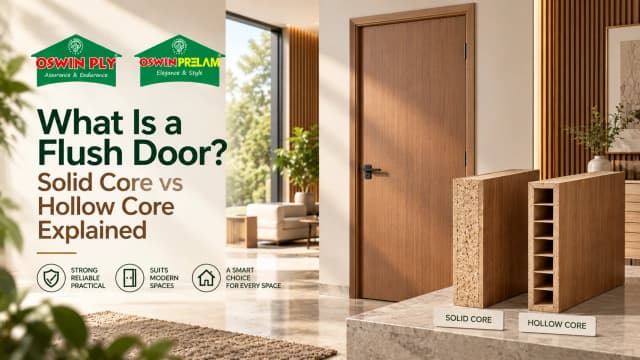
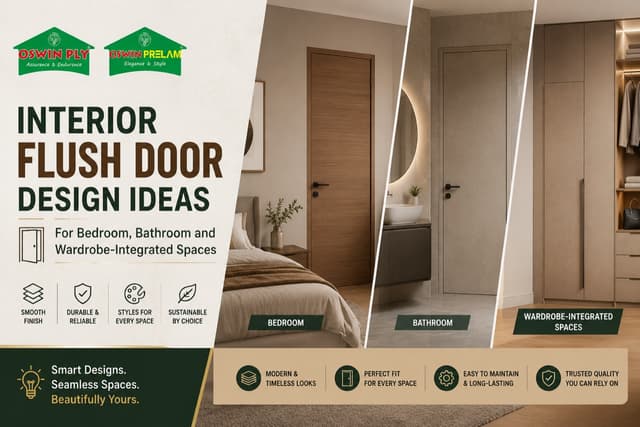
Beyond furniture, Gurjan-core plywood is widely used in flush door manufacturing specifically because door cores face repeated stress at the hinge points that a lighter core would wear into more quickly. A door swings on the same two or three hinge points thousands of times over its life, and the screw-holding strength that Gurjan’s density provides directly extends how long those fixings stay solidly seated. The same logic applies to any structural panel that carries repeated load at a fixed point, brackets, wall-mounted shelving, and similar fittings all benefit from the same core-density advantage that makes Gurjan valuable in furniture.
Gurjan is harvested primarily from forests in Northeast India and parts of Southeast Asia, where the Dipterocarpus genus grows naturally. Responsible sourcing matters for this timber species specifically, since demand for dense, high-quality hardwood veneer has historically put pressure on natural forest stock. Buyers who want to verify sourcing practice can ask their dealer or manufacturer about supply chain and any sustainability certification the timber carries, this is a reasonable question to ask of any premium hardwood-core product, not just plywood.
Gurjan is not the only dense hardwood used in premium plywood cores, but it is among the most widely available and well-established in Indian manufacturing specifically. Other regional hardwoods can offer comparable density, though supply consistency and price vary considerably by species and region. What matters most for a buyer is not the specific species name on its own, but confirming the core is genuinely a dense hardwood rather than a fast-growing softwood marketed under a similar-sounding name, the practical performance gap between hardwood and softwood cores is larger than the gap between different hardwood species.
Plywood built using Gurjan (Dipterocarpus), a dense hardwood, as the core veneer, giving it greater strength, screw-holding, and termite resistance than softer core species.
For load-bearing and long-life furniture, yes, meaningfully. For light-duty, budget, dry-interior work, a soft-core board may be sufficient and more cost-effective.
Ask whether the core plies (not just the face) are Gurjan, check the weight against a same-thickness sample, and ask for the ISI standard number rather than trusting the label alone.
Density is one of the genuine mechanisms behind termite resistance, so Gurjan-core boards do have an advantage, though preservative treatment of the veneers is the primary driver, the two typically arrive together in a well-made board.
No, they describe different things, Gurjan is a core wood species, BWP is a moisture-resistance grade. A board can be Gurjan-core and BWP-grade at the same time, the two specifications work together rather than one replacing the other.
The Gurjan timber itself costs more than faster-growing soft-core alternatives, and its density adds weight and material cost per sheet, the price reflects the raw material, not extra processing.
Yes, its density and strength make it a strong choice for flush door cores specifically, where structural rigidity and long-term shape stability both matter more than in most other furniture applications.
Core species alone does not determine outdoor suitability, moisture grade does. A Gurjan core combined with BWP or marine grade resin bonding is suitable for exterior-adjacent use, Gurjan core alone without the correct moisture grade is not sufficient for genuine outdoor exposure.
Oswin Ply Club is built from 100% Gurjan core, ISI-certified, for furniture carcasses, load-bearing shelving and flush door cores where density and termite resistance matter most. Ask us about Gurjan-core options at the grade your project needs.
Call 044 2669 0023 or find your nearest Oswin dealer.
Written by Mr. Balakrishna Iyer, GM – Sales (Tamil Nadu), Oswin Ply (Oswin Wood Panels Pvt. Ltd), a Chennai-based plywood and block board manufacturer. We manufacture ISI-certified BWP plywood, marine plywood, flush doors, block boards and Prelam boards, including HDHMR-core options, supplying dealers across Tamil Nadu, Karnataka, Andhra Pradesh, Telangana, Maharashtra and Goa.