

Calibrated plywood is a term that shows up in technical specification sheets far more often than in everyday furniture shopping conversations, which is exactly why it’s worth understanding. It’s not a grade, and it’s not a moisture specification, it’s a quality-control step that quietly determines how well a finished piece of furniture actually looks once the laminate or veneer goes on.
Calibrated plywood is plywood that has been sanded or machined after the initial pressing process to achieve a precise, consistent thickness across the entire sheet, rather than relying solely on the thickness achieved during manufacturing. Raw pressed plywood can vary slightly in thickness from one area of a sheet to another, a variation small enough to go unnoticed in many applications, but a genuine problem anywhere a perfectly flush, uniform surface is the goal.
Laminate and veneer work depends on consistent substrate thickness in a way raw structural applications simply don’t. An uncalibrated sheet can telegraph its thickness variation straight through to the finished surface, especially under a thin laminate layer, showing up as subtle waviness or uneven pressure points that are difficult to trace back to the substrate once the furniture is assembled. Calibration solves this at the source, before the laminate or veneer is ever applied, rather than trying to compensate for it afterward.
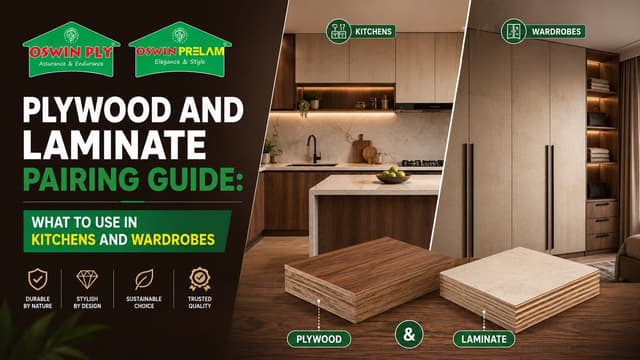
For a deeper look at how substrate consistency interacts with laminate finish selection specifically, our Plywood and Laminate Pairing Guide covers kitchen and wardrobe applications where this matters most.
| Factor | Standard plywood | Calibrated plywood |
|---|---|---|
| Thickness consistency | Can vary slightly across the sheet | Precisely uniform across the entire sheet |
| Best for | General structural use, uncritical applications | Laminate and veneer work, multi-panel flush installations |
| Additional processing | None beyond standard pressing | Sanded or machined to exact tolerance after pressing |
| Cost | Standard | Modest premium for the additional processing step |
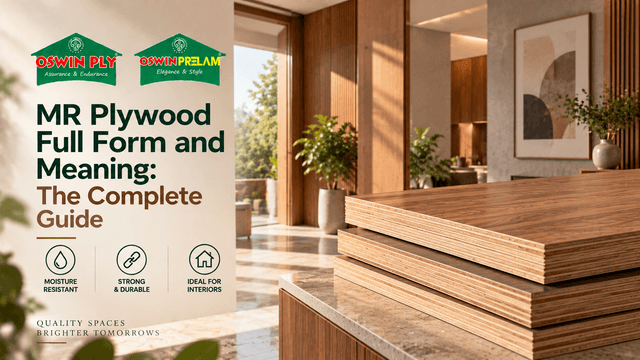
It’s worth being clear that calibration is independent of grade, a board can be calibrated regardless of whether it’s MR, BWP, or marine grade, since it addresses thickness consistency rather than moisture resistance. For the full grade breakdown, see our complete guide to Plywood Grades, Types and Uses.
After a plywood sheet is pressed, it passes through a sanding or machining process specifically designed to remove minor high spots and bring the entire sheet to a single, consistent thickness tolerance, rather than the small natural variation that pressing alone typically produces. This is a distinct manufacturing step, separate from the surface sanding that prepares a board for finishing, focused specifically on dimensional consistency rather than surface smoothness. A properly calibrated sheet will measure within a tight tolerance across its full length and width, not just at the center.
Not every application needs calibrated plywood, and paying the premium for it on a project where it won’t matter is an avoidable cost. Structural applications hidden from view, shelving supports, cabinet backs not meant to be seen, or any panel that won’t receive a laminate or veneer finish, generally don’t benefit meaningfully from calibration. Reserve the additional cost for surfaces where the finished appearance genuinely depends on substrate consistency.
As laminate and veneer finishing techniques advanced and thinner, more consistent decorative layers became the norm in modular furniture manufacturing, the tolerance for substrate inconsistency shrank correspondingly. Older, thicker decorative finishes could mask minor thickness variation in the plywood beneath them, but the thin, precise laminates common in today’s modular furniture have no such forgiveness built in. Calibration emerged as a direct response to that shift, a manufacturing step that didn’t exist as a formal, named process decades ago but is now considered baseline good practice for any plywood destined for a laminate or veneer finish.
The additional cost for calibration is modest relative to the total cost of a finished laminate or veneer project, typically a small percentage increase on the plywood itself, while the finish work built on top, laminate sheets, veneer, edge-banding, labor, represents the larger share of total project cost. Given that, skimping on calibration to save a small amount on the substrate while investing heavily in the visible finish is a false economy. The inconsistency calibration prevents is precisely the kind of flaw that undermines an otherwise expensive, carefully chosen finish.
Ask the dealer directly whether the sheet has been calibrated, since it’s genuinely not always visible on inspection, particularly before any finish is applied. Where possible, measure the thickness at multiple points across the same sheet, corners and center, with a caliper. A meaningful variation between measurements on a sheet marketed as calibrated is a sign to ask further questions or look at a different supplier.
No. Calibration is a quality-control processing step focused on thickness consistency, entirely separate from grade, which refers to moisture resistance. A board can be both calibrated and any grade, MR, BWP, or marine.
Not necessarily. For general furniture without a laminate or veneer finish, standard non-calibrated plywood at the appropriate grade is usually sufficient. Calibration matters most where a thin decorative finish will reveal underlying thickness inconsistency.
Ask the dealer directly, and where possible, measure the sheet’s thickness at several points with a caliper to check for consistency. Visual inspection alone often won’t reveal whether a sheet has been calibrated.
Yes, typically a modest premium over standard plywood, reflecting the additional sanding or machining step required to achieve the precise thickness tolerance.
Calibrated plywood is a small, easy-to-overlook specification that has an outsized effect on how professional a finished, laminate-covered piece of furniture actually looks. For structural, unfinished applications it rarely matters, but anywhere a flush, consistent surface is the goal, asking specifically about calibration before you buy is worth the extra question.
Oswin Wood Panels manufactures ISI-certified plywood calibrated for consistent thickness, ideal for laminate and veneer work, alongside block board, flush doors and Prelam boards, from Chennai. Ask us about calibrated stock for your finish project.
Call 044 2669 0023 or find your nearest Oswin dealer.
Written by Mr. Balakrishna Iyer, GM – Sales (Tamil Nadu), Oswin Ply (Oswin Wood Panels Pvt. Ltd), a Chennai-based plywood and block board manufacturer. We manufacture ISI-certified BWP plywood, marine plywood, flush doors, block boards and Prelam boards, including HDHMR-core options, supplying dealers across Tamil Nadu, Karnataka, Andhra Pradesh, Telangana, Maharashtra and Goa.