

Marine plywood gets asked for constantly and understood rarely. Most buyers know it costs more than BWP and assume that means it is simply “more waterproof.” That is not quite what is happening, and the actual difference is worth twenty minutes to understand before you pay the premium, because in a lot of cases you are paying for a property your furniture will never actually need.
Marine plywood is built to the same core promise as BWP, phenolic resin bonding that survives prolonged exposure to water, but with a stricter construction standard: higher-grade veneers with fewer core gaps, tighter voids, and a more consistent ply count. It costs more because the raw material and manufacturing tolerance are tighter, not because it is a fundamentally different chemical process. If your furniture will see sustained water contact rather than occasional splash, marine grade is worth the premium. If it will not, BWP already covers you.
Marine plywood is manufactured using the same phenol-formaldehyde resin used in BWP grade, bonded under heat and pressure so the glue line itself becomes water-resistant rather than just the surface. What separates marine grade is the veneer quality control behind it: fewer core voids, no overlapping or short veneer patches, and a higher minimum ply count for a given thickness. In practice, that means a marine sheet holds up better at cut edges and screw points under sustained water exposure than a standard BWP sheet of the same nominal grade.
The construction difference is mostly invisible from the face of the sheet. Two boards can look identical from the front and behave very differently once you cut into them, which is exactly why marine grade gets misused in both directions, sold as a premium upsell where BWP would do, and skipped where it was genuinely needed because a buyer could not tell the difference by looking.
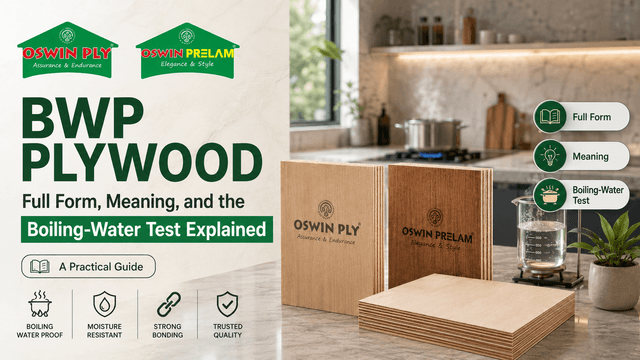
Marine plywood is evaluated against the same IS 710 boiling-water bond test that BWP uses, but manufacturers producing genuine marine grade typically hold tighter internal tolerances than the minimum the standard requires. The test itself involves submerging sample sections in boiling water for a set period, then checking the glue line for any separation between plies. A board that passes cleanly, with no delamination at the edges or around knots, earns the grade. The tighter veneer selection behind marine grade means fewer sheets fail this test at the margins compared to a standard BWP run.
No, and this matters more than the marketing around it suggests. “Marine grade” describes construction quality and water resistance under IS 710 style testing, not an absolute waterproof guarantee. A marine sheet submerged indefinitely will eventually fail, just far later and far more gracefully than a commercial or MR grade board would. Think of it as the most water-tolerant option available in plywood, not as a substitute for a genuinely waterproof material like sealed marine-grade composite or metal.
The honest way to think about the grade ladder is tolerance, not immunity. MR tolerates humidity. BWP tolerates sustained exposure and boiling water. Marine tolerates the most demanding version of that same exposure with the least risk of edge failure. None of the three make wood behave like a material that was never wood to begin with.
| Factor | BWP (IS 710) | Marine Grade |
|---|---|---|
| Resin | Phenol-formaldehyde | Phenol-formaldehyde, same family |
| Veneer quality control | Standard grading | Tighter, fewer core voids |
| Typical use case | Kitchens, exteriors, general moisture | Sustained or repeated water exposure |
| Price premium | Baseline | Meaningfully higher |
| Edge performance under water | Good | Better, fewer voids for water to enter |
| Best for | Most moisture-prone furniture | Boat-adjacent, dock, prolonged wet exposure |
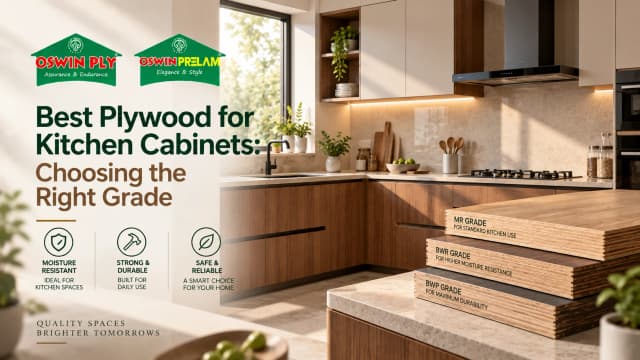
The most frequent mistake is treating marine grade as a blanket upgrade rather than a targeted one. A full kitchen built entirely in marine grade costs meaningfully more than a mixed-grade kitchen with marine or BWP under the sink and around the hob, and MR everywhere else, without a proportional gain in durability for the dry zones. The second common mistake is the reverse: assuming a board is marine grade because a dealer says so, without checking the IS mark and asking what standard the specific sheet was tested to. Grade claims should be verifiable, not just stated. Our guide to choosing plywood for kitchen cabinets breaks down this zone-by-zone approach in detail.
Price varies by thickness, face veneer species, and brand, with the marine premium over BWP typically running noticeably higher for the same thickness. Thicker sheets and premium face veneers compound the cost further. Ask your dealer for the IS 710 grade marking and the ply count specifically, price alone does not confirm genuine marine construction, and some sheets are sold at marine prices without the veneer quality control that actually justifies it.
Moisture grade and core wood species are two separate specifications that buyers often conflate. Marine grade describes the resin bonding and veneer quality control, it does not by itself specify what timber the core plies are made from. A marine-grade sheet can be built on a Gurjan core or a softer alternative, and the two combine rather than substitute for each other. A Gurjan-core marine sheet, like Oswin Ply Club, carries both the density benefits of the timber and the moisture performance of the grade, which is a genuinely premium combination, and worth asking about directly if long-term structural performance in a wet environment is the goal rather than moisture resistance alone.
Even the best marine-grade sheet underperforms if it is installed poorly. Cut edges that are left unsealed expose the core plies directly to moisture, regardless of how tightly controlled the veneer quality was at the factory. Proper edge banding, sealant at joints, and correctly fitted hardware all matter more in practice than most buyers expect, a mid-grade board installed carefully often outlasts a premium board installed carelessly. When budgeting for a marine-grade project, factor in the cost of proper edge sealing and installation, not just the sheet price itself.
For a standard home kitchen, BWP grade is normally sufficient. Marine grade earns its cost in sustained, heavier water exposure than a typical kitchen sees, commercial kitchens and coastal climates are where it pays off.
A phenolic-resin bonded plywood built to a tighter veneer quality standard than BWP, giving it better performance under sustained water exposure at cut edges and joints.
Marine grade’s resin bonding contributes to resistance, but termite resistance depends more on veneer treatment and timber density than on the marine grading itself, ask specifically about preservative-treated veneers. See our guide to termite-resistant plywood for more.
Yes, particularly for the zones under the sink and around the dishwasher where moisture exposure is highest. Upper cupboards rarely need it.
Check the IS mark and ask the dealer which standard number it references, then compare weight and edge quality against a BWP sheet of the same thickness, a genuine marine sheet should show noticeably fewer visible core gaps at the cut edge.
The gap varies by brand and city rather than following a fixed ratio, get a direct quote for both grades at the same thickness before assuming the premium.
Quality varies meaningfully by manufacturer even within the marine grade label, since the standard sets a minimum bar rather than a single fixed specification, this is exactly why checking the IS mark and asking about ply count matters more than trusting the grade name alone.
Specific zones, in almost every realistic case. Using it under the sink and around the dishwasher while specifying BWP or MR for the remaining dry cabinetry gets the durability where it is needed without paying the marine premium across furniture that will never see comparable moisture exposure.
Oswin Wood Panels manufactures ISI-certified marine, BWP and MR grade plywood, including Gurjan-core marine options, from Chennai. Tell us the exposure level and we’ll help you spend the premium only where it actually earns its keep.
Call 044 2669 0023 or find your nearest Oswin dealer.
Written by Mr. Balakrishna Iyer, GM – Sales (Tamil Nadu), Oswin Ply (Oswin Wood Panels Pvt. Ltd), a Chennai-based plywood and block board manufacturer. We manufacture ISI-certified BWP plywood, marine plywood, flush doors, block boards and Prelam boards, including HDHMR-core options, supplying dealers across Tamil Nadu, Karnataka, Andhra Pradesh, Telangana, Maharashtra and Goa.