

Match the laminate to the surface, not to the room. Use 1mm or thicker laminate on horizontal surfaces that take impact, wear, and water: countertops, shelves, kitchen worktops. Use 0.8mm on vertical surfaces: shutters, wardrobe fronts, side panels. Underneath, use IS 710 BWP plywood wherever water reaches, and BWR or MR plywood in dry areas. And laminate both faces of every panel, even the face nobody sees. That last rule is why most shutters warp.
Mostly, yes. Sunmica is a brand of decorative laminate that became so dominant in India that the brand name replaced the product name, the way Xerox came to mean photocopy. When your carpenter says “sunmica”, he means decorative laminate, whatever brand is on the sheet.
The technical name is HPL: High Pressure Laminate. It is layers of kraft paper soaked in resin, topped with a printed decorative paper and a clear protective overlay, then pressed under high heat and pressure into a hard, thin sheet. In India, decorative laminates are covered by IS 2046.
This is the whole article in one table.
| Where | Board underneath | Laminate on top | Why |
|---|---|---|---|
| Kitchen base cabinet carcass | IS 710 BWP plywood | 0.8mm (interior faces) | Water pools on floors. Nothing else survives here. |
| Kitchen countertop | BWP ply + stone/quartz | 1mm to 1.5mm if laminated | Heat, knives, spills, constant wiping |
| Kitchen shutters | Prelam or BWP/BWR ply | 0.8mm to 1mm both faces | Vertical, but splash-exposed and handled daily |
| Under-sink unit | IS 710 BWP plywood | 1mm, edges fully sealed | The single wettest point in the house |
| Wardrobe carcass | BWR or MR plywood | 0.8mm | Dry zone, load bearing |
| Wardrobe shutters | Prelam or calibrated ply | 0.8mm BOTH faces | Finish matters most; warping risk highest |
| Loft and overhead storage | BWR plywood | 0.8mm | Dry, but carries weight |
| Wall panelling, TV units | MDF or prelam | 0.8mm | Decorative, dry, no load |
| Bathroom vanity | IS 710 BWP plywood | 1mm, edges sealed | Standing water and humidity |
| Study table, desktop | BWR plywood | 1mm to 1.5mm | Horizontal wear surface |
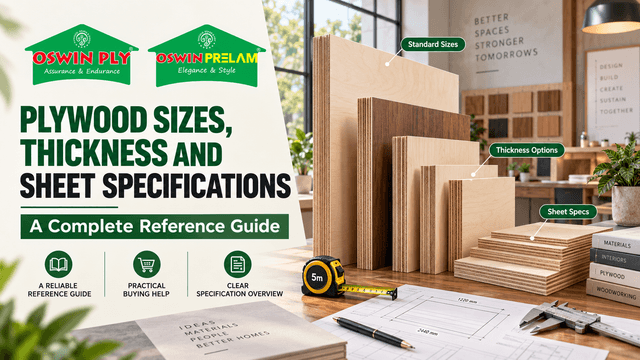
Indian furniture laminate runs roughly 0.6mm to 1.5mm. Three numbers matter:
0.8mm: vertical surfaces. Wardrobe shutters, cabinet fronts, side panels, wall panelling. The wear layer is the same as thicker grades, so it looks identical and lasts well on a surface nobody drops things on. This is the default for shutters and the honest cost saving on most jobs.
1mm: horizontal and high-contact surfaces. Countertops, worktops, shelves, desks, and any kitchen shutter handled twenty times a day with wet hands. Better impact resistance where things actually get dropped.
1.5mm and above: heavy duty. Commercial counters, reception desks, hostel and school furniture, anything taking public abuse.
A useful international reference point: the standard grades are HGS (around 1.1 to 1.2mm, horizontal general purpose, square edges), HGP (around 0.9 to 1.0mm, postforming, for curved edges) and VGP (around 0.7mm, vertical only). Postforming grades are the ones that can be heat-bent around a radius. If your design has rounded counter edges, ask specifically for postforming grade. A standard horizontal grade will crack if you try to bend it.
This is the most useful paragraph in this article.
If you laminate only one face of a panel, it will warp. Not might. Will, eventually.
Here is why. Laminate and the board underneath expand and contract at different rates as humidity changes. Laminate one face and you have created an unequal sandwich: one side moves, the other does not, and the panel bows toward the unlaminated side. In Chennai, where the monthly average humidity swings from roughly 60% in early summer to over 80% in November, this happens faster than in dry climates.
The fix is called a balancing laminate or backing laminate: a second sheet on the reverse face that nobody will ever see. The laminate industry is explicit about this. Formica’s own technical data states that panel assemblies should be laminated with the appropriate backing sheet to minimise warpage, and that optimum balancing is obtained by bonding the same surface laminate on both sides of the assembly, with the same adhesive.
Read that again: the same laminate, and the same adhesive, on both sides.
In practice, Indian fabricators often use a cheap 0.6mm liner or skip the back entirely to save a few hundred rupees per shutter. That saving is why the wardrobe door does not close flush eighteen months later. When you are quoted for a job, ask one question: “Is the back of every shutter getting a balancing laminate?” The answer tells you what kind of fabricator you are dealing with.
Here is the part that costs us something to publish.
Laminate manufacturers do not love plywood as a substrate. Formica’s technical documentation goes as far as to say that, because of the potential for stress cracking, shrink-back and surface telegraphing, the use of plywood is strongly discouraged. They recommend particleboard or MDF instead.
They have a point, and the reason is telegraphing. Plywood has a grain and a layered core. Under a thin laminate, especially in gloss, small variations in the core can show through as faint lines or waviness. Fibreboards have no grain, so they lie perfectly flat under laminate.
So does that mean do not use plywood? No. It means using the right plywood and knowing where the risk actually is:
That last point is a product we sell, so weigh it accordingly. The first three cost us nothing to tell you and matter more.
| Laminate (HPL) | Veneer | Acrylic | |
|---|---|---|---|
| What it is | Resin-pressed paper with a printed design | A thin slice of real wood | A high-gloss plastic sheet |
| Look | Prints, including realistic woodgrain | Genuine wood, every sheet unique | Mirror gloss, solid colours |
| Cost | Lowest | Highest | Middle to high |
| Durability | High. Scratch and stain resistant | Needs polish; scratches show | Scratches and fingerprints show badly |
| Maintenance | Wipe clean | Periodic polishing | Constant wiping |
| Repair | Replace the sheet | Can be sanded and re-polished | Difficult |
| Best for | Kitchens, wardrobes, anything working hard | Feature furniture, statement pieces | Gloss kitchen shutters, away from heavy use |
In one line: laminate for anywhere that gets used, veneer where you want real wood and will maintain it, acrylic where you want gloss and can live with fingerprints.
Under-sink unit. IS 710 BWP plywood, 1mm laminate, every edge sealed, including the sink cutout. This is where kitchens die. Do not save money here.
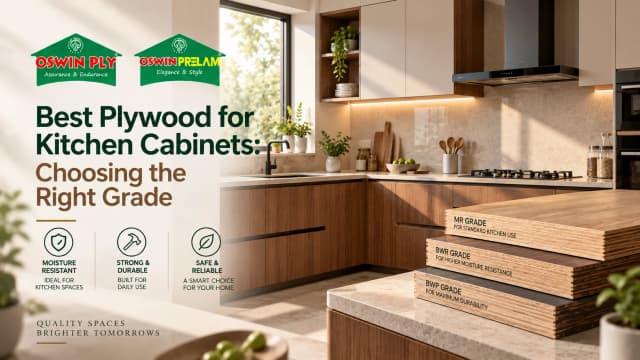
Base cabinets. BWP plywood carcass. Water reaches the floor whether from a leak, a spill, or a mop.
Wall and tall units. BWR plywood is adequate. They sit above the splash zone.
Shutters. 0.8mm to 1mm, both faces. Prelam is a legitimate alternative to site lamination here, and usually a flatter one.
Countertop. If you are laminating rather than using stone, 1mm minimum, and preferably postforming grade if the edge is curved.
Around the hob. Laminate has a temperature limit. Formica’s guidance is not to use it in areas exceeding 135C. Direct heat from a hob or a pan straight off the flame will blister any laminate. Use stone or steel behind and beside the hob.
Carcass. BWR or MR plywood is fine. A wardrobe is a dry-zone item unless it shares a wall with a bathroom, in which case go BWR minimum.
Shutters. This is where the balancing-laminate rule earns its keep. Tall wardrobe shutters are the most warp-prone element in any Indian home: large surface, humidity swings, and often laminated on one side to save cost. 0.8mm both faces, or use prelam.
Internal shelves. 0.8mm laminate is sufficient. Watch the span instead: a common trade rule of thumb is to support plywood shelves beyond about 60cm, or they sag over the years.
Loft. BWR plywood, 0.8mm. It carries suitcases, so the board matters more than the surface.
The material is half the job. These four details are the other half, and they are where site work usually fails:
Laminate is priced per sheet (8ft x 4ft) and varies enormously by brand, finish, and design. Rough guidance for 2026:
Ask your dealer for current rates per sheet in your city and check the brand and thickness printed on the sheet, not just the shade card. Two sheets showing the same shade can be different thicknesses and different prices.
Yes, in everyday Indian usage. Sunmica is a laminate brand that became the generic word for decorative laminate, the way Xerox came to mean photocopying. The technical name is HPL, or High Pressure Laminate, covered in India by IS 2046. When buying, ask for the actual brand and thickness rather than just "sunmica".
For kitchen shutters, 0.8mm to 1mm. For countertops and any horizontal wear surface, 1mm or thicker, and postforming grade if the edge is curved. What matters more than the laminate is the board underneath: use IS 710 BWP plywood for base cabinets and under-sink units. Keep laminate away from direct hob heat.
0.8mm is sufficient for wardrobe shutters, carcasses, and internal shelves. Wardrobes are vertical, dry-zone furniture that does not take impact. Spend the savings on the balancing laminate for the reverse face instead, which matters far more.
Almost always because they were laminated on one face only. The laminated side and the bare side react differently to humidity, so the panel bows. The fix is a balancing laminate on the reverse, ideally the same sheet with the same adhesive. Unbalanced panels, thin uncalibrated boards, and long unsupported spans make it worse.
A sheet of laminate applied to the hidden reverse face of a panel purely to stop it warping. It is not decorative, and nobody sees it. Laminate manufacturers recommend using the same laminate and the same adhesive on both faces for best results. Skipping it is the most common and most expensive shortcut in Indian fabrication.
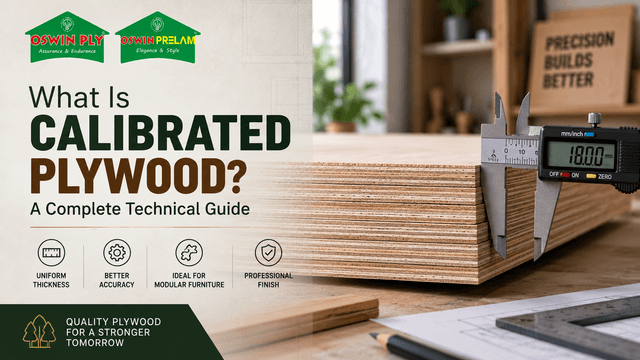
Yes, and it is done constantly in India. But use calibrated plywood, which is machine-sanded flat, or the plywood's grain and core can telegraph faintly through the laminate, particularly in gloss finishes. Laminate makers actually prefer fibreboards as substrates for this reason. Where water is present, plywood is still the right board, because telegraphing is cosmetic and water damage is structural.
Neither is universally better. 0.8mm is correct for vertical surfaces such as shutters and panels. 1mm is correct for horizontal surfaces that take impact, such as countertops and desks. The wear layer is the same on both, so the difference is impact resistance, not appearance or lifespan on the wall.
Laminate is resin-pressed paper with a printed design: the cheapest and most durable. Veneer is a thin slice of real wood: most expensive, needs polishing, but genuinely wood. Acrylic is a high-gloss plastic sheet: mirror finish, but shows every fingerprint and scratch. Laminate is the practical choice for kitchens and wardrobes.
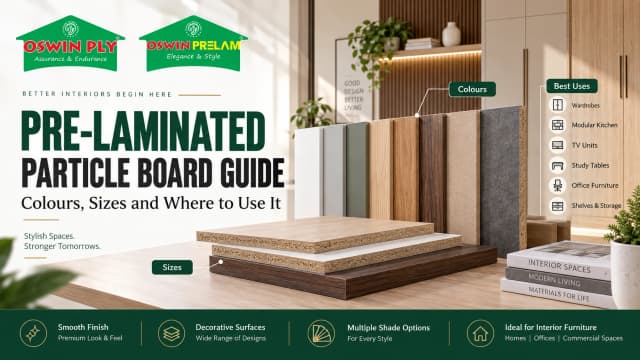
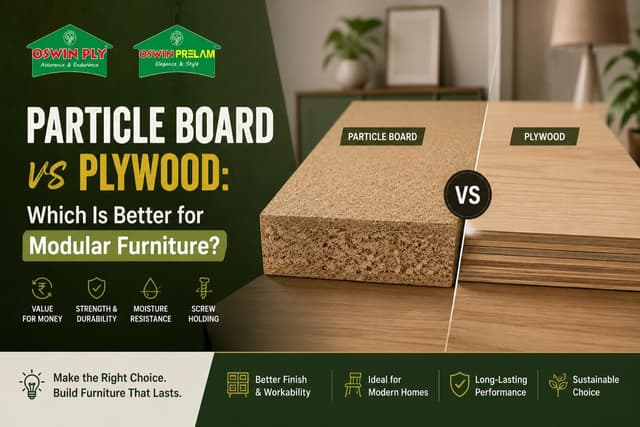
Particle board with the decorative laminate already pressed onto it in the factory, under controlled heat and pressure. It arrives finished and balanced on both faces, which is why it stays flatter than site-laminated board. It suits shutters, wardrobe panels, and wall units. It is not a substitute for BWP plywood in wet areas.
No. Laminate is a surface layer. Water enters a board through its cut edges and any unsealed joint, not through the laminate face. Waterproofing comes from the board grade, meaning IS 710 BWP plywood, plus properly sealed edges. Laminating MDF does not make it a kitchen material.
Written by Mr. Balakrishna Iyer, GM – Sales (Tamil Nadu), Oswin Ply (Oswin Wood Panels Pvt. Ltd), a Chennai-based plywood, block board, and prelam particle board manufacturer. We manufacture ISI-certified BWP plywood, marine plywood, flush doors, block boards, and prelam boards in 80+ shades. We do not manufacture decorative laminates.
Tell us the zones, and we will tell you which board belongs where, including the ones where the honest answer is a product we do not make. Call 044 2669 0023 or find your nearest Oswin dealer.