

Between a flush door and a panel door, most homeowners already know flush doors well; they are the plain, flat option covered in an earlier guide. Panel doors are the other major interior and exterior door type, built from a frame with raised or recessed panels rather than one flat flush face. This guide covers what a panel door actually is, the common styles, where it works best, and how it stacks up against a flush door for a straightforward choice.
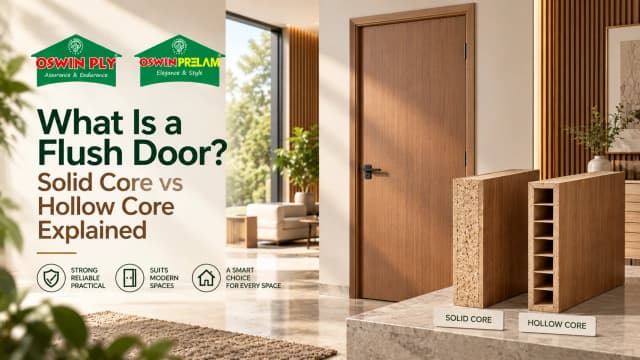
A panel door is built from a solid wood or plywood frame (stiles and rails) with individual panels fitted into the frame rather than one continuous flat surface. The panels can sit flush with the frame, sit recessed below it, or stand raised above it, which is where the visual character of a panel door comes from. This is a different construction method from a flush door, which is a flat plywood or laminate sheet over a solid or hollow core with no separate panel sections at all.
Panel doors suit spaces where the door itself is part of the visual design, not just a functional opening. That makes them a common choice for:
| Panel door | Flush door | |
|---|---|---|
| Construction | Framed with individual panels | Flat sheet over a solid or hollow core |
| Look | Traditional to formal, depending on style | Clean, minimal, contemporary |
| Cost | Generally higher, more material and joinery | Generally lower, simpler construction |
| Maintenance | More surface detail to clean and maintain | Flat surface, easier to wipe down and maintain |
| Best for | Main doors, formal rooms, wardrobes | Bedrooms, bathrooms, high-frequency interior doors |
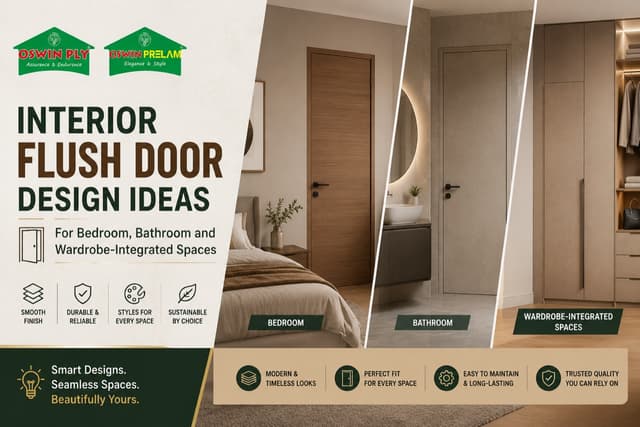
Neither is objectively better; the choice usually comes down to where the door sits and what look the rest of the room is working toward. For a closer look at flush door styles and room-by-room design ideas, see Oswin Ply’s Interior Flush Door Design Ideas guide.
Panel doors are typically built from solid wood, wood-look laminate over a plywood frame, or a combination of both for the frame and panels. The same grade considerations that apply to flush doors apply here: a panel door for an exterior-facing main entrance needs better moisture performance than one for an interior study or living room, so it is worth discussing grade with your dealer based on exactly where the door will be installed, not just its style.
A panel door has a visible frame with individual raised or recessed panels set into it. A flush door is one flat, continuous surface with no separate panel sections. The difference is mainly structural and visual; both can be built to similar durability standards depending on the core and grade used.
Generally yes, since panel doors involve more joinery and material shaping than a flat flush sheet. The exact difference depends on the panel style, wood species, and finish chosen.
Yes, louvered panel doors in particular are a common wardrobe shutter choice where ventilation is useful. Solid or glass panel styles also work for wardrobes where the door is part of the room’s visible design.
Durability comes down to the core material and grade rather than the door type itself. A well-built panel door and a well-built flush door in the same grade will perform similarly; the panel door simply has more surface detail to maintain over time.
Oswin Wood Panels manufactures both panel and flush doors, alongside ISI-certified plywood, block board and Prelam boards, from Chennai. Our team can help match door style and grade to exactly where each door will be installed.
Call 044 2669 0023 or find your nearest Oswin dealer.
Written by Mr. Balakrishna Iyer, GM – Sales (Tamil Nadu), Oswin Ply (Oswin Wood Panels Pvt. Ltd), a Chennai-based plywood and block board manufacturer. We manufacture ISI-certified BWP plywood, marine plywood, flush doors, block boards and Prelam boards, including HDHMR-core options, supplying dealers across Tamil Nadu, Karnataka, Andhra Pradesh, Telangana, Maharashtra and Goa.