

MR plywood is the grade most Indian homes are actually built with, and the one buyers understand least, because “moisture resistant” gets used loosely for anything that isn’t obviously cheap. If you’ve stood in a dealer’s shop hearing MR, commercial, and BWP used almost interchangeably, this is the guide that untangles them.
MR stands for Moisture Resistant, certified under IS 303. It is built to handle everyday humidity and occasional splash, not standing water or sustained exposure. That is the entire specification, and it is also the most commonly misunderstood one in the market, largely because “moisture resistant” sounds like it should mean more than it actually certifies.
MR grade plywood uses a urea-formaldehyde or similar resin bonding that resists everyday atmospheric humidity and light, occasional contact with water. It is not built to survive standing water or repeated soaking the way BWP (phenol-formaldehyde, IS 710) is. For dry interior furniture, wardrobes, bedroom furniture, living room units, MR grade is the standard, sensible, cost-effective choice, and it is what the overwhelming majority of furniture-grade plywood sold in India actually is.
The resin difference is the real dividing line between MR and BWP, not a marketing distinction. Urea-formaldehyde bonds are genuinely weaker under sustained moisture than phenol-formaldehyde bonds, which is why MR grade is specified for humidity rather than water contact. Understanding this one chemistry fact explains almost every practical rule about where each grade belongs.
Most interior furniture in a typical home never touches water directly. Wardrobes, bed frames, study tables, and living room units live in rooms where the only moisture exposure is ambient humidity, which is exactly what MR grade is built for. Specifying BWP throughout an entire home adds cost without adding protection where none is needed, which is why MR became the practical default for anything outside the kitchen and bathroom rather than a compromise choice.
Not quite, and this is where a lot of confusion starts. Genuine MR plywood carries the IS 303 certification. “Commercial grade” is trade terminology for general-purpose interior plywood, and depending on the manufacturer, it may or may not actually meet the IS 303 standard. Ask specifically for the IS 303 mark rather than accepting “commercial” as a synonym for MR, the two terms get used interchangeably in casual conversation at dealer counters, but they are not guaranteed to describe the same product.
| Factor | MR (IS 303) | BWP (IS 710) |
|---|---|---|
| Resin | Urea-formaldehyde or similar | Phenol-formaldehyde |
| Moisture handling | Everyday humidity, light splash | Sustained water exposure, boiling-water tested |
| Typical price | Lower | Meaningfully higher |
| Best for | Dry interior furniture, wardrobes, bedroom units | Kitchens, exteriors, moisture-heavy zones |
| Wrong place to use it | Under the sink, bathroom vanities | Rarely wrong, mainly a cost question |
For the full grade ladder from MR through marine, see our complete guide to Plywood Grades, Types and Uses.
MR grade is the most widely stocked plywood category across Indian dealers, precisely because it matches the largest share of real demand, dry interior furniture. This wide availability is generally good news for buyers, more stock choice and more competitive pricing than a specialty grade, but it also means MR grade sees the most variation in actual quality between manufacturers, since so many mills produce a version of it. Sticking with an established, verifiable brand matters more for MR grade than for a narrower specialty product, simply because there is more competition at this price point cutting corners to compete.
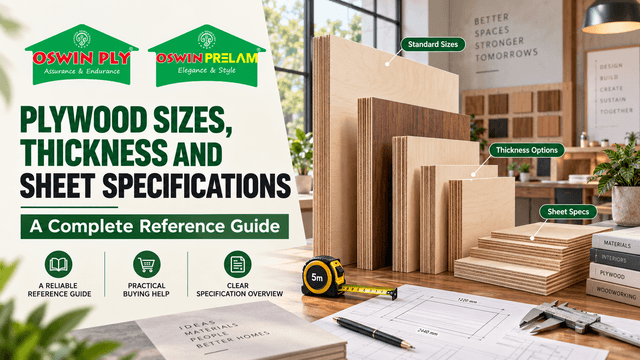
MR grade is available across the same standard thickness range as other plywood grades, most commonly 6mm, 12mm, 18mm, and 19mm. 18mm is the practical standard for wardrobe and cabinet carcasses that carry real weight, 12mm suits shelving and lighter internal dividers, and anything below 12mm is best reserved for backs and non-structural panels regardless of grade. Thickness and grade are separate decisions, a thin BWP sheet is not a substitute for a properly thick MR sheet where load-bearing matters more than moisture resistance. For the full sheet-size and thickness reference, see our Plywood Sizes and Thickness guide.
A proper invoice for MR grade plywood should state the IS 303 standard explicitly, alongside the thickness, the manufacturer’s brand name, and ideally the batch or production date. If an invoice simply says “plywood” or “MR ply” with no standard number attached, that is worth querying before payment rather than after installation, when a dispute becomes far harder to resolve. This single habit, checking the paperwork as carefully as the board itself, is one of the most effective ways to avoid the mismatch between what was promised verbally and what was actually delivered.
Moisture grade and termite resistance are governed by different parts of a board’s construction, and MR grade on its own says nothing about pest resistance. Termite resistance comes primarily from preservative treatment of the veneers and, to a lesser extent, the density of the core wood species used. A well-treated MR sheet can have solid termite resistance despite its lower moisture grade, while an untreated BWP sheet may not. If termite exposure is a genuine concern for your project, ask about preservative treatment specifically rather than assuming a higher moisture grade automatically covers it.
The most frequent error is treating MR as interchangeable with any lower-cost board a dealer offers, without confirming the IS 303 mark is actually present. The second common mistake runs the other way, over-specifying BWP throughout a home out of caution, which adds real cost without adding real benefit in genuinely dry rooms. The third is ignoring thickness in the specification entirely, a correctly graded but under-thick sheet will still sag or fail structurally under load regardless of how well it resists moisture. Getting all three right, grade, verification, and thickness, together is what actually delivers furniture that performs as expected.
Moisture Resistant, certified under IS 303, built for everyday humidity and occasional light splash, not standing water.
Not for the wet zones. MR is fine for upper cabinets away from the sink, but base units and under-sink cabinetry need BWP or marine grade.
Not necessarily. “Commercial grade” is a trade term, MR is a certified IS 303 standard. Ask for the IS mark specifically rather than assuming they match.
BWP typically costs more than MR for the same thickness, the exact gap depends on brand and city, ask your dealer for current per-sheet pricing.
No, MR grade is built for indoor humidity, not sustained weather exposure. Exterior applications need BWP grade at minimum.
In a genuinely dry interior application with proper edge sealing, MR grade furniture holds up well for many years, the grade’s limitations only show up if it is used somewhere with real moisture exposure.
Any plywood can warp under sustained humidity swings or poor storage before installation, MR grade is no more prone to this than other grades when used within its intended dry-interior application and stored flat before fitting.
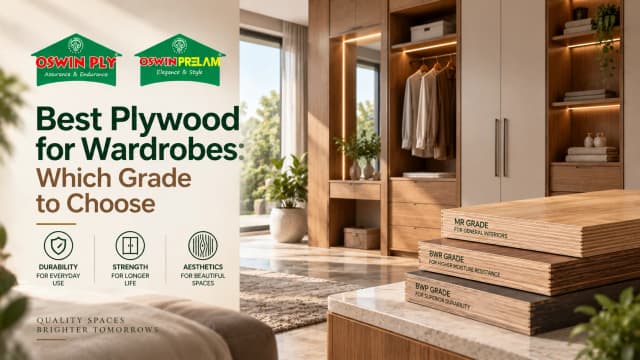
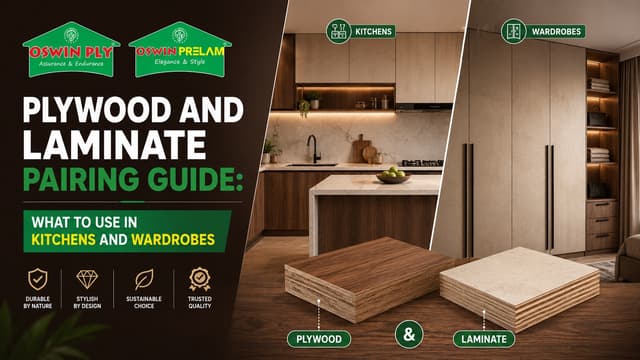
Yes, this is one of MR grade’s best-suited applications, wardrobe interiors are dry, low-moisture spaces where MR’s everyday humidity resistance is exactly matched to the real exposure the board will face. See our guide to the best plywood for wardrobes.
Oswin Wood Panels manufactures ISI-certified IS 303 MR grade plywood alongside BWP and marine grades, block board and Prelam boards, from Chennai. Tell us the room and we’ll help you match the grade to the real exposure, not over-spec it.
Call 044 2669 0023 or find your nearest Oswin dealer.
Written by Mr. Balakrishna Iyer, GM – Sales (Tamil Nadu), Oswin Ply (Oswin Wood Panels Pvt. Ltd), a Chennai-based plywood and block board manufacturer. We manufacture ISI-certified BWP plywood, marine plywood, flush doors, block boards and Prelam boards, including HDHMR-core options, supplying dealers across Tamil Nadu, Karnataka, Andhra Pradesh, Telangana, Maharashtra and Goa.