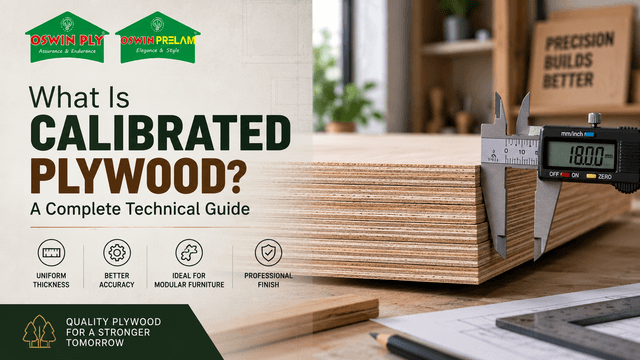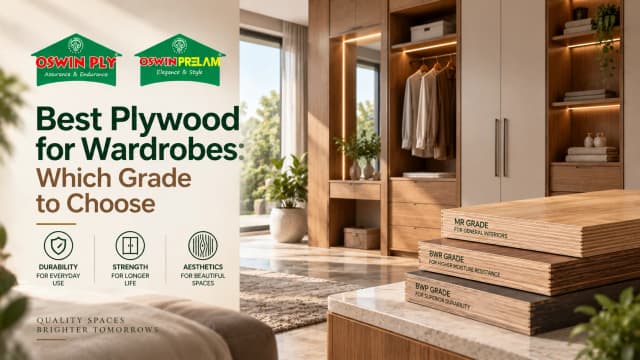


Ask for plywood at a hardware shop and you will hear several names for what looks like the same thing: plywood board, plyboard, ply board and plywood sheet. Some buyers wonder whether these are different products with different quality. In most cases, they are not.
This guide explains what each name means, where the confusion comes from, which boards are sometimes sold under the same names but are not plywood, and what to say to your dealer so that you get the board you actually want.
In Indian shops, plywood board, plyboard and plywood sheet almost always mean the same product: a flat panel made of thin wood veneers glued in cross-layers under heat and pressure. The names differ, but the material does not. What changes the board is its grade, thickness, size, face finish and brand. The name tells you very little, so always add those details when you ask or order.
Because board is a general word, it is also used for other panels. That is where buyers get caught.
| Name you may hear | What it usually is | How it is built |
|---|---|---|
| Plywood board, plyboard, plywood sheet | Plywood | Veneers glued in cross-layers throughout |
| Block board | A separate board | A core of wood strips between veneers |
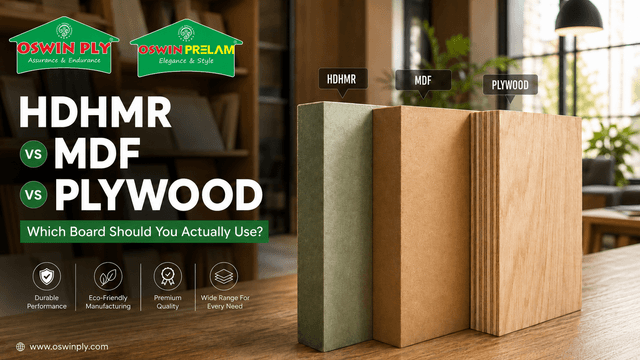
| Particle board | A separate board | Compressed wood chips and resin |
| MDF | A separate board | Compressed wood fibres and resin |
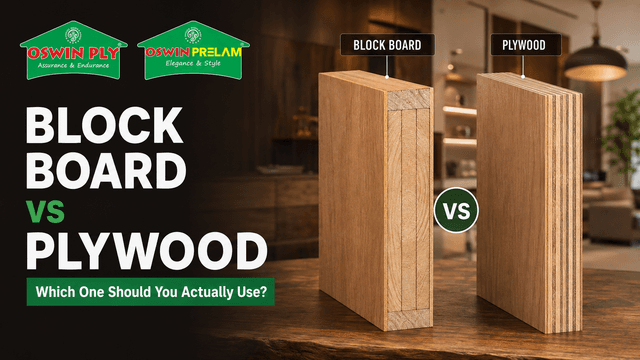
If a dealer says board without a name, ask which one. Engineered Wood vs Plywood, Block Board vs Plywood: Which One Should You Actually Use? and Particle Board vs Plywood explain how these boards differ and where each one belongs.
The name of the board is only the start. A clear order includes five details.
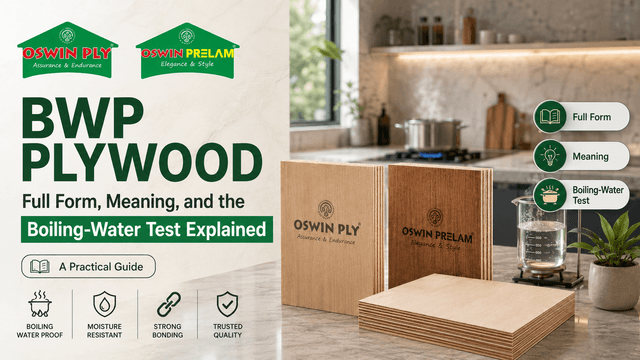
A good order line reads like this: 18 mm BWR plywood, 8 x 4 ft, hardwood faces. It leaves no room for a different board to be handed over. The grades are explained in MR Plywood Full Form and Meaning: The Complete Guide, BWR Plywood: Meaning, Uses and Where It Fits Between MR and BWP, BWP Plywood Full Form, Meaning and the Boiling-Water Test Explained and Marine Plywood Explained: What It Actually Is and Where You Need It.
Once the name is settled, the next word you hear is usually the grade or the type. These are the ones that come up most.
| Type | Built for | Where it is used |
|---|---|---|
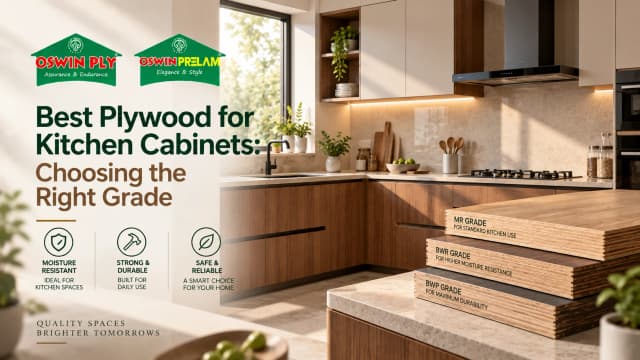
| MR | Dry rooms and occasional dampness | Wardrobes, shelves, study tables |
| BWR | Occasional moisture | Upper kitchen units, utility areas |
| BWP | Prolonged moisture | Under-sink units, bathroom vanities |
| Marine | The highest moisture grade | Boards facing sustained water |
| Film faced | Repeated use on site | Concrete formwork |
| Commercial | Basic indoor work | Light furniture in dry rooms |
Shuttering Plywood and Film Faced Plywood: What They Are and Where to Use Them and Commercial Plywood: What It Actually Is and Where It Belongs cover the last two.
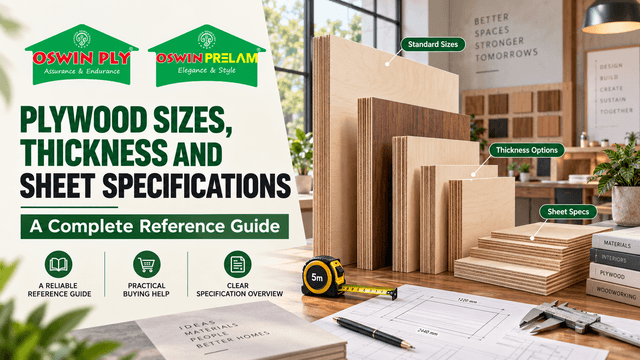
Plywood sheets are commonly 8 x 4 ft, and thickness commonly runs from about 6 mm to 25 mm. Thin sheets suit cabinet backs and partitions, 16 to 19 mm suits carcasses and shutters, and 25 mm suits heavy shelves and table tops. The full reference is in Plywood Sizes, Thickness and Sheet Specifications.
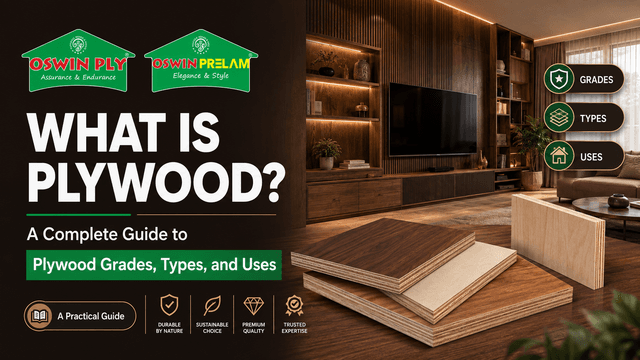
Whatever name it goes by, a plywood board is built in the same way. Thin sheets of wood, called veneers, are peeled from a log, dried, coated with adhesive and stacked so that the grain of each layer runs at right angles to the one below. The stack is then pressed under heat until the adhesive sets.
That cross-grain layering gives plywood its strength in both directions, and it is why the board resists splitting and warping better than solid timber does. A sheet normally has an odd number of layers, so the grain of the two outer faces runs the same way and the board stays balanced. The faces are chosen for appearance, and the inner layers, the core, are chosen for stiffness.
Plywood is talked about by shopkeepers, carpenters, contractors and online sellers, and each group has its own shorthand. Carpenters say ply or ply board because it is quick. Online listings use plyboard or plywood sheet because those are the words people type into a search box. Dealers say board when they mean any flat panel. None of these names is a grade, and none tells you anything about the quality of the board.
The risk is not the name itself. It is that the same word can cover very different products, from a thin cabinet-back sheet to a thick, moisture-grade board for a kitchen. That is why the order details above matter more than the label.
A line that says only 18 mm plywood board leaves most of the decisions open. Two dealers can write the same line and supply boards of different grades, cores and faces. A clear order lists the grade, the thickness, the sheet size, the face finish and the brand, and the invoice should repeat them. If a line is vague, ask for it to be written out in full before you confirm the order, because that line is what you can point to if the board is not what you expected.
Oswin Ply makes plywood, block board, flush doors and prelam particle board, and sells them through authorised dealers. When you speak to a dealer, name the board and the grade, and ask to see the marking on the sheet.
Yes. Plyboard is another spelling and shorthand for plywood. Both mean a panel made of thin wood veneers glued in cross-layers.
There is no difference in the material. Plywood sheet stresses the standard sheet form, usually 8 x 4 ft, and plywood board is the more general name.
Plywood generally holds screws better and is stronger across its width, but the right board depends on the job. Engineered Wood vs Plywood compares them.
The most common size is 8 x 4 ft, about 2,440 x 1,220 mm. Other sizes are made, so confirm the size with your dealer.
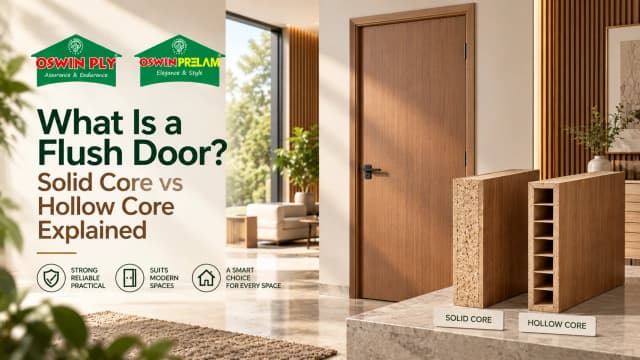
Look at the cut edge. Plywood shows thin layers throughout, while block board shows strips of wood in the middle between thin face layers.
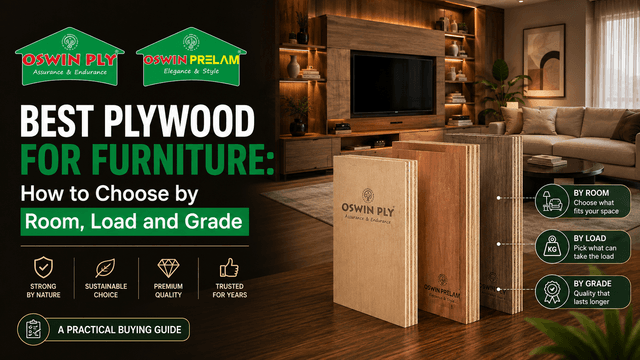
It depends on the room. MR grade suits dry rooms, and BWR or BWP suits areas near water. Best Plywood for Furniture: How to Choose by Room, Load and Grade sets it out room by room.
Each group in the trade has its own shorthand. Ply board is a carpenter's shorthand, plyboard is a search spelling, and plywood sheet describes the sheet form. They all point to the same product.
No. The name does not set the quality. The grade, thickness, core and brand do, which is why they should be written on the invoice.
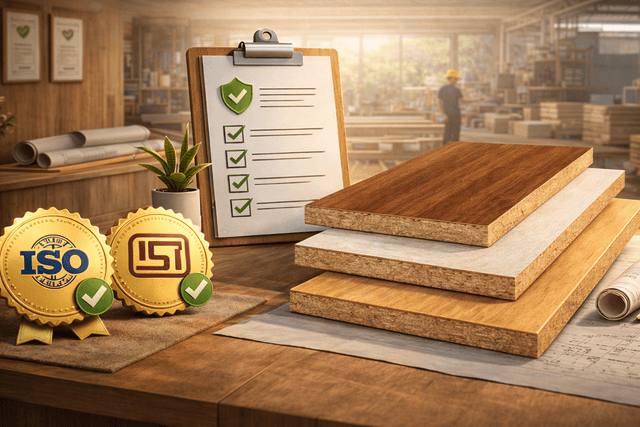
Oswin Wood Panels manufactures ISI-certified plywood, block board, flush doors and Prelam boards from Chennai. Find your nearest Oswin Ply dealer and name the board, grade and thickness you want.
Call 044 2669 0023.
Written by Mr. Balakrishna Iyer, GM – Sales (Tamil Nadu), Oswin Ply (Oswin Wood Panels Pvt. Ltd), a Chennai-based plywood and block board manufacturer. We manufacture ISI-certified BWP plywood, marine plywood, flush doors, block boards and Prelam boards, including HDHMR-core options, supplying dealers across Tamil Nadu, Karnataka, Andhra Pradesh, Telangana, Maharashtra and Goa.